
The Problem: Rising Salt Levels in Freshwater
Scientists at Toronto and Region Conservation Authority (TRCA) update water quality trends across the Toronto region and it’s the same story every year. Chloride concentrations, a component of winter road salt, are increasing in freshwater streams across the Toronto region and even surpassing guidelines to protect aquatic life.
Chloride can be toxic to aquatic organisms with acute effects (e.g., death) above 640 mg/L and chronic effects (e.g., lower growth and reproduction) above 120 mg/L (CCME, 2011). Rising chloride (and sodium) in groundwater, and higher concentrations in urban areas, are also a concern from a human health (e.g., drinking water) perspective. Most plants cannot tolerate high levels of chloride, which can affect landscaping efforts, making it more expensive to maintain as plants need to be replaced more frequently.
Chloride
Winter salt applied to roads, parking lots, and sidewalks most often consists of sodium chloride. Magnesium chloride and calcium chloride are also applied, however to a lesser extent due to cost. The chloride ion quickly separates when dissolved in water, making chloride an important parameter to monitor for evidence of winter salt impacts.
When road salt is applied to roads, sidewalks and parking lots, it doesn’t remain on the surface forever. It’s washed away by melting snow or rain, flowing into ditches or stormwater systems, and eventually ending up in stormwater ponds, streams, or groundwater. As that salt moves off the surface, some of it accumulates in nearby soils.
Using Halophytes to Remove Salt in Soils: A Study at Toronto Pearson Airport
Dr. Lyndsay Cartwright, Research Scientist, Ecosystem and Climate Science at TRCA, reached out to one of the world’s leading experts in phytoremediation in August of 2020. Dr. Barb Zeeb, a Professor at the Royal Military College of Canada and cross-appointed at Queen’s University, has been involved in phytoremediation studies on heavy metals, organochlorines (PCBs and DDT), petroleum hydrocarbons and more recently salt-contaminated sites.
Phytoremediation involves using plants to remove contaminants from soil and water. Halophytes are plants that can tolerate salty soil. They tolerate salt using three mechanisms: 1. Exclusion – excluding salt from entering roots, 2. Accumulation – taking up salt through the roots and storing in aboveground tissue, and 3. Excretion – taking up salt through the roots then excreting it through specialized glands on the leaf surface. Both accumulator and excretor halophytes provide potential options for salt extraction.
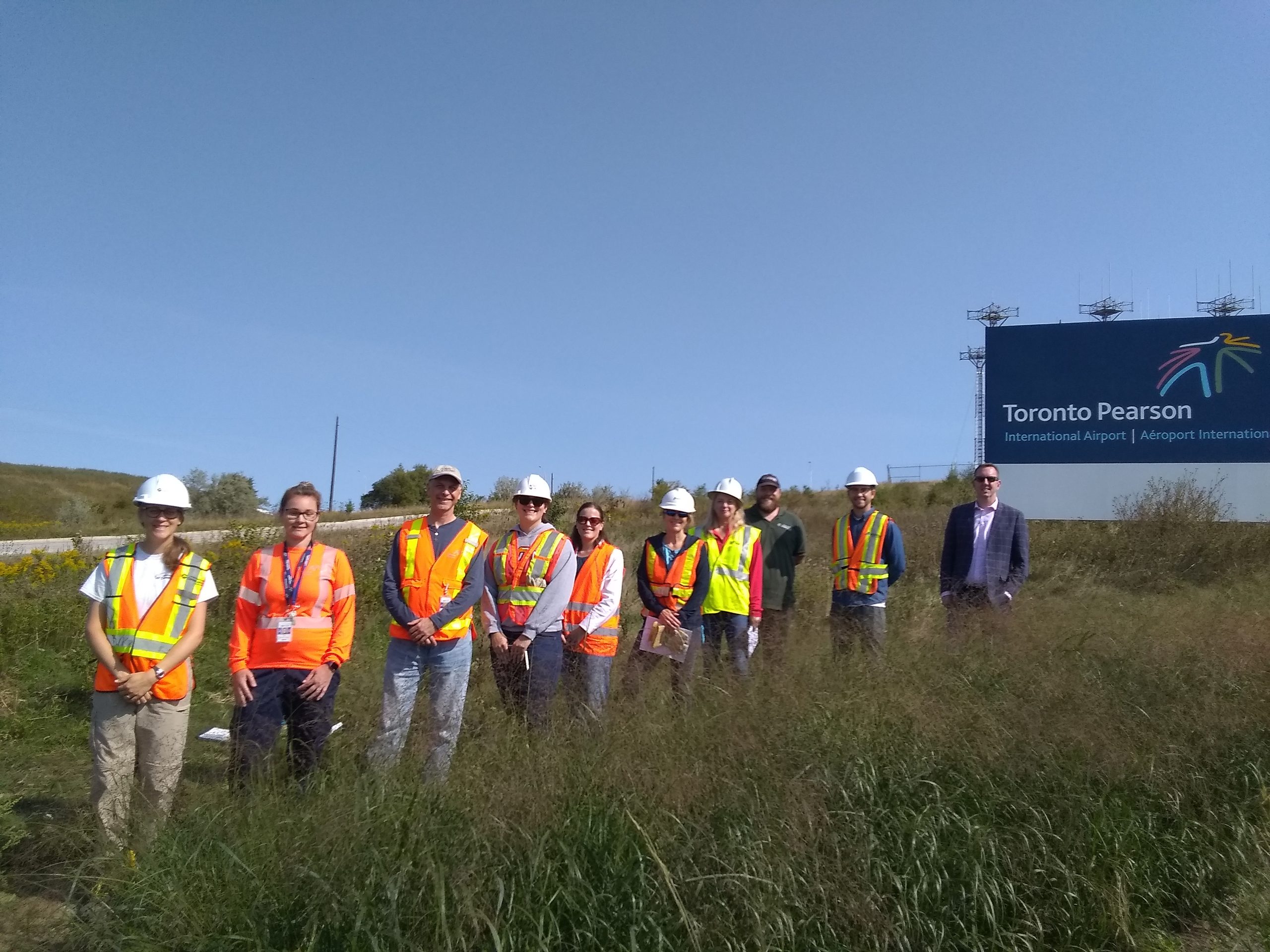
With funding and support from TRCA’s Partners in Project Green (PPG) and TRCA’s Restoration team, Cartwright and Zeeb planned and implemented a phytoremediation project at Toronto Pearson Airport in June 2022.
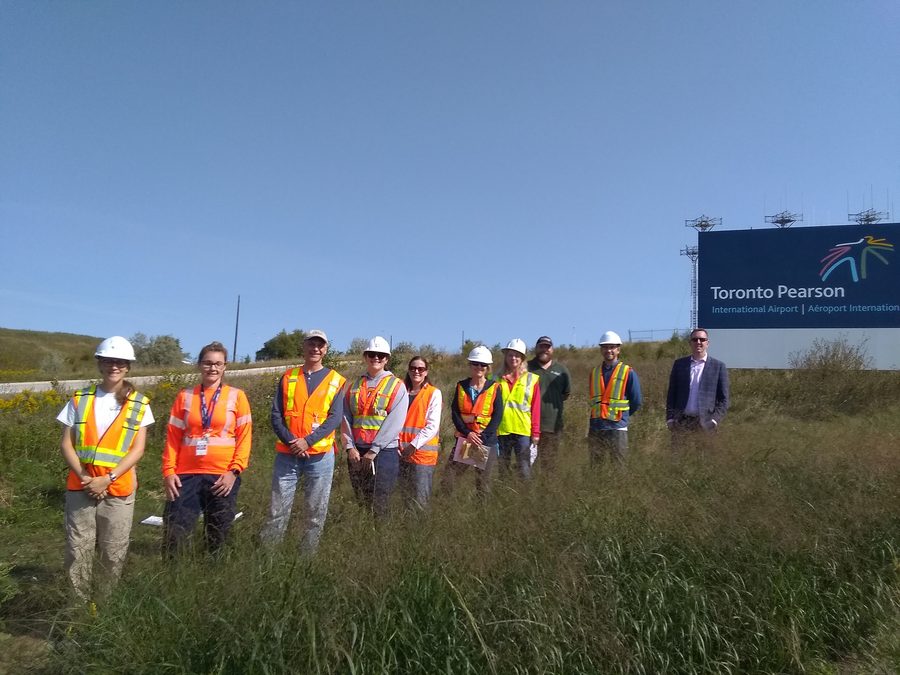
Toronto Pearson has long been an advocate and supporter of innovative solutions to environmental sustainability. The airport’s use of traditional road salt is limited to the public roadways, parking lots, sidewalks and entrance areas. It is not applied near aircraft or runways because of its highly corrosive and damaging effects on aviation infrastructure. However, there was interest in supporting this research due to its potential to advance nature-based solutions that could help remediate salt‑impacted soils across the broader community.
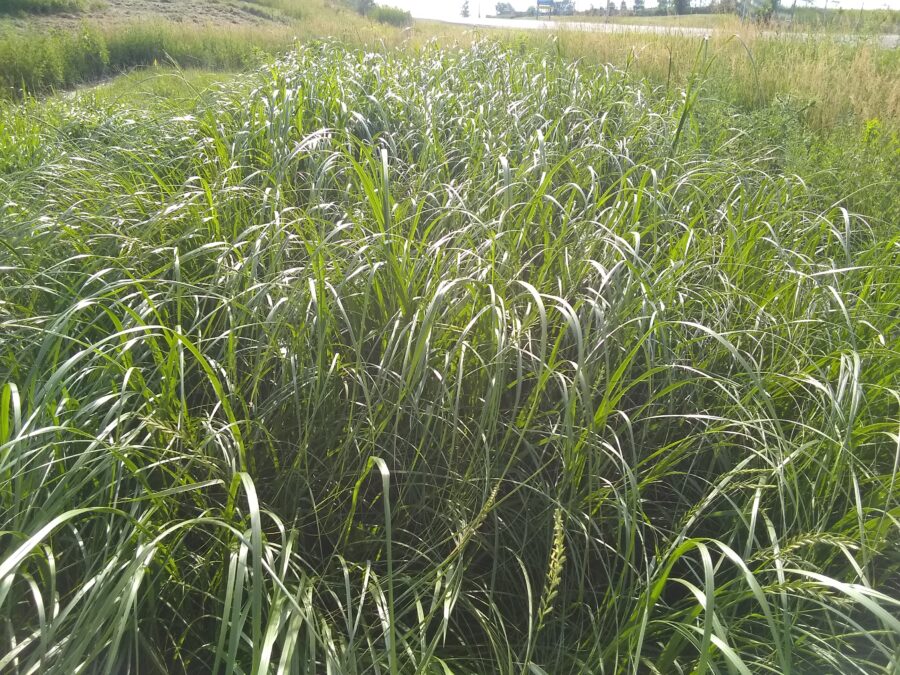
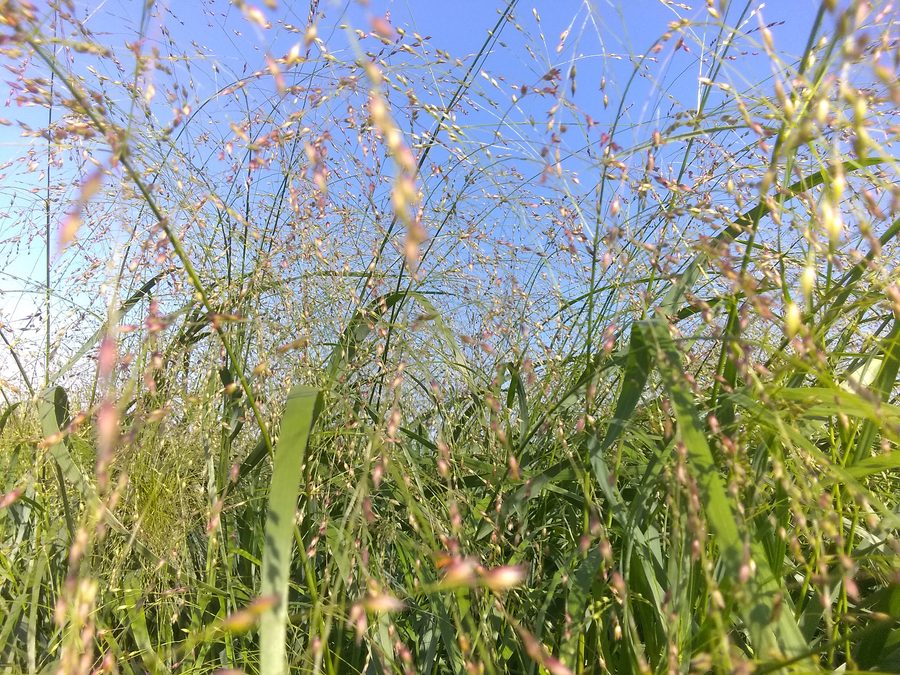
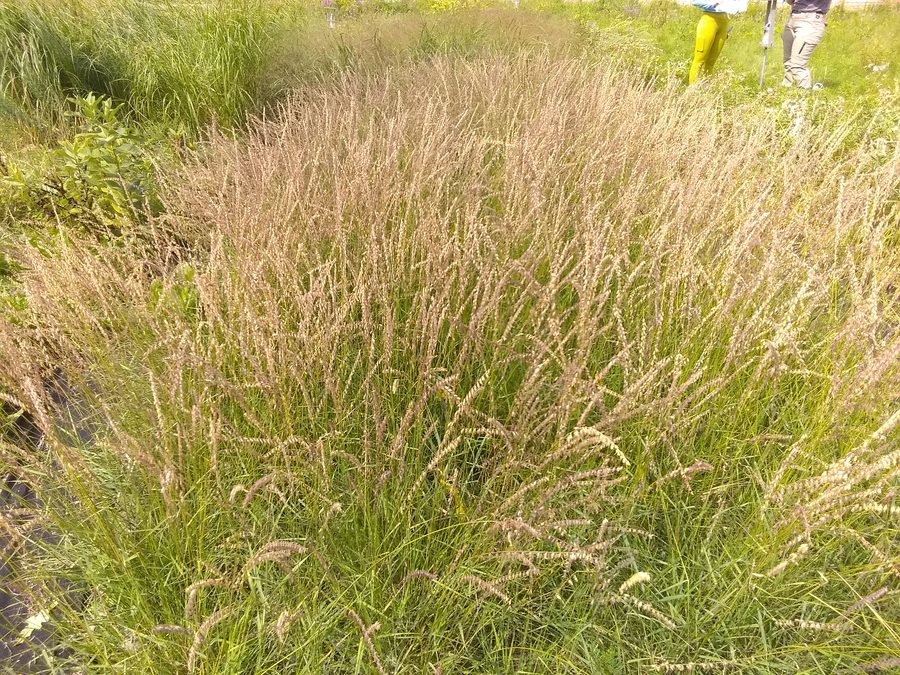
Four species of native perennial grasses were chosen to examine their phytoremediation potential for removing roadside salt. Two accumulator species, switchgrass (Panicum virgatum) and sand dropseed (Sporobolus cryptandrus), and two excretor species, prairie cordgrass (Sporobolus michauxianus) and side-oats grama (Bouteloua curtipendula) were planted. In the first year – i.e. 2022, the plants grew well; however, to understand the true potential of these species, they need to be studied for more than just one year.
In 2023, the team received funding through the Ontario Ministry of Transportation’s Highway Infrastructure Innovations Funding Program for 3 years and a sponsorship from the 407 ETR. This funding has been integral in understanding longer term dynamics of using halophytes in roadside conditions.
Plant samples were collected each year between 2022-2025 and results indicate that all four plant species can take up high levels of chloride. Timelines for remediation were calculated based on plant biomass production, the amount of chloride taken up by each plant and the soil salt concentration.
Switchgrass, prairie cordgrass and side-oats grama are projected to remediate this location in less than three years.
Toronto Pearson continues to serve as a test site in exploring scalable phytoremediation solutions for high-salt-use industrial properties. By providing land for this work, Toronto Pearson has provided real-world conditions to test the approach, alongside the research, funding and program partners that have each played an important role in moving the project forward.
Lessons Learned
- Halophytes can be used to remediate areas with high or low salt to protect soils from current or future salt impacts.
- If an area receives stormwater runoff from a paved area that gets salted in the winter, it is likely a suitable location to plant halophytes. However, to be sure, soil samples can be sent to an accredited lab to confirm chloride levels.
- Planting is best carried out in the spring (late May or June). It is recommended to use plant plugs (plants that have a head start in growth) instead of seed. These usually cost $3-5 per plug and can be planted about 8”-10” apart, but this spacing varies with species.
- Weeding and watering are especially important during the first year of planting to ensure the plants outcompete any other plants and have the ability to establish strong root systems. This task can be delegated to a landscaping contractor or your organization’s Green Team.
- From a landscaping perspective and functional use of the planted space, it is important to recognize that different plant species grow to varying heights, impacting visibility of the area.
Integrating Halophytes into Your Landscape
Interested in exploring how to incorporate halophytes into your organization’s salt management mitigation and landscaping efforts? Partners in Project Green’s Corporate Flood and Heat Risk Management program provides a comprehensive site assessment of stormwater and heat risks on industrial, commercial, and institutional properties (eligibility criteria applies), including an assessment of implementation considerations for phytoremediation.
To get involved:
- Review the eligibility criteria
- If eligible, contact us at ppg@trca.ca for a consultation
- Complete a site assessment
- Receive an assessment report
- PPG will provide expertise to support the implementation of plantings
Further Efforts to Reduce Salt Entering the Environment
Limiting Road Salt Use
Remember that while phytoremediation is part of the solution, limiting road salt application through effective salt management plans and exploring salt alternatives is essential. The Sustainable Technologies Evaluation Program (STEP) provides resources and guidelines on how to manage salt effectively. Learn about how winter salt maintenance contractors can get Smart About Salt certified to reduce salt usage while maintaining safety.
Limited Liability
Phytoremediation is only part of the solution to salt contaminated soil, groundwater, and freshwater lakes and streams. Limiting road salt application through effective salt management plans and liability protection legislation are both vital for keeping freshwater fresh. Liability protection includes indemnity to contractors if they are certified, enforceable contractor training and provincially endorsed Best Management Practice standards for snow and ice management. Learn more about Limited Liability.
School Programming
TRCA’s Education team has also built phytoremediation programing into their Native Plants Program with three Peel District High Schools. The program involves soil sampling, water sampling, and halophyte planting with students in areas adjacent to salted areas in the winter. As of Spring 2025, two halophyte plantings have been completed with a third in progress. Harvesting of the plants from the first two plantings is set to take place in the Fall of 2026 and additional funding is being sought to continue program offerings.
Further Research
Wider interest in phytoremediation has led to other questions being developed and tested at other field sites including: How would halophytes work when included in a roadside seed mix? Would they be able to survive given varying weather conditions and plant competition? How does mowing affect plant growth, survival, and ability to extract salt?
Building halophytes into landscaping design may take time but working collaboratively with stakeholders to understand the opportunities they offer is a vital first step towards a less salty future.
Resources
Learn about Halophytes: https://partnersinprojectgreen.com/what-are-halophytes/
Webinar: Using Native, Salt-Tolerant Plants to Restore Impacted Soils Webinar Archive
Resource: Procurement Guidance for Parking Lot Snow and Ice Management
Resource: Sustainable Technologies Evaluation Program (STEP)
Want to learn more about Halophytes? Check out What Are Halophytes?
Want to learn more about ways to reduce salt? Check out the Sustainable Salt Management Resource Hub.