
Background
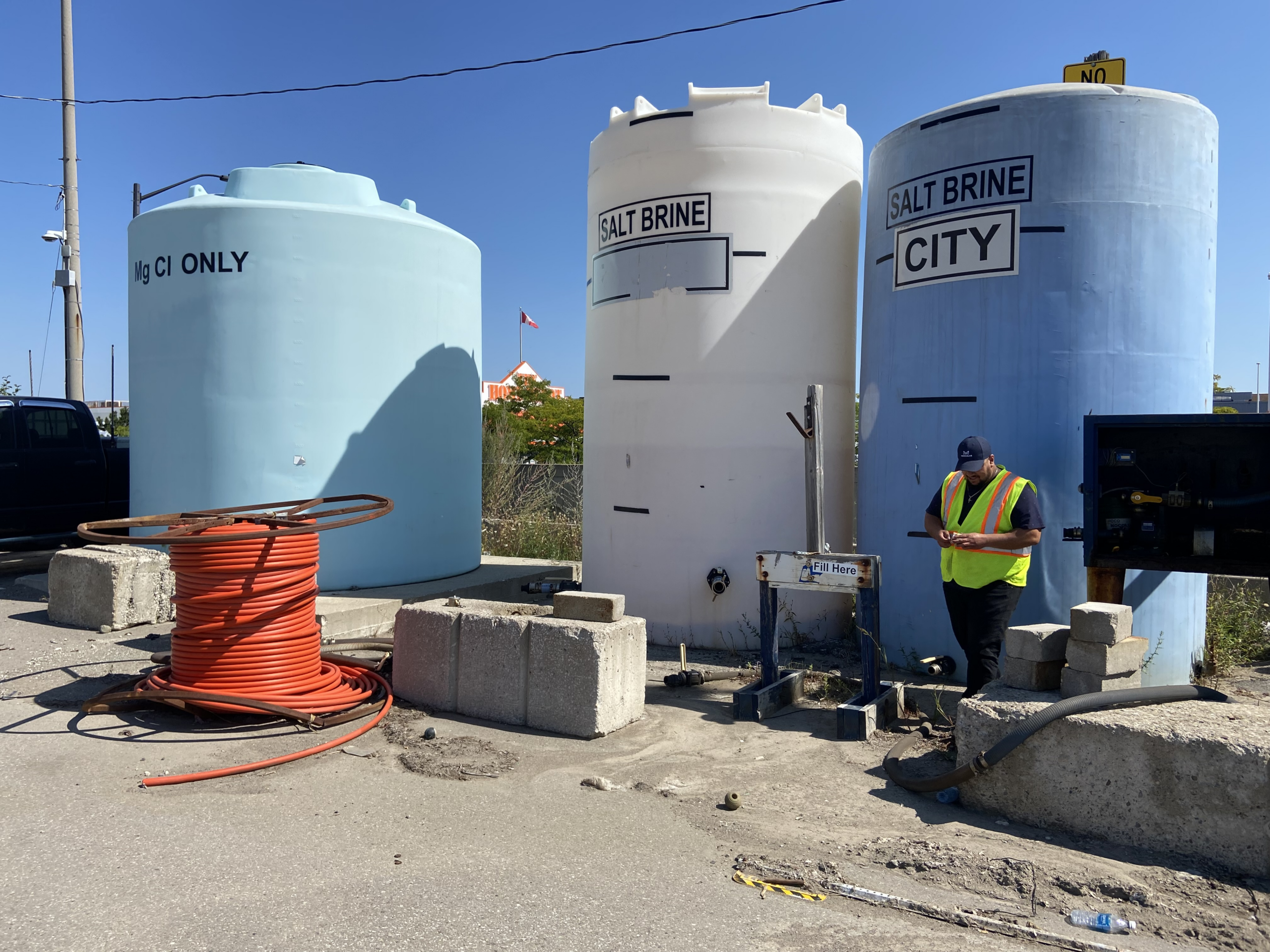
Mavis South Works Yard in Mississauga housed three large above‑ground storage tanks used to store salt brine for winter maintenance operations. The brine program supported anti‑icing and pre‑wetting activities to improve winter road safety and reduce overall salt usage.
The tanks had been decommissioned for approximately 10–15 years. Mavis South Works Yard purchased new brine tanks and installed them in a different location on their property for better accessibility and efficiency.
Scope of the Project
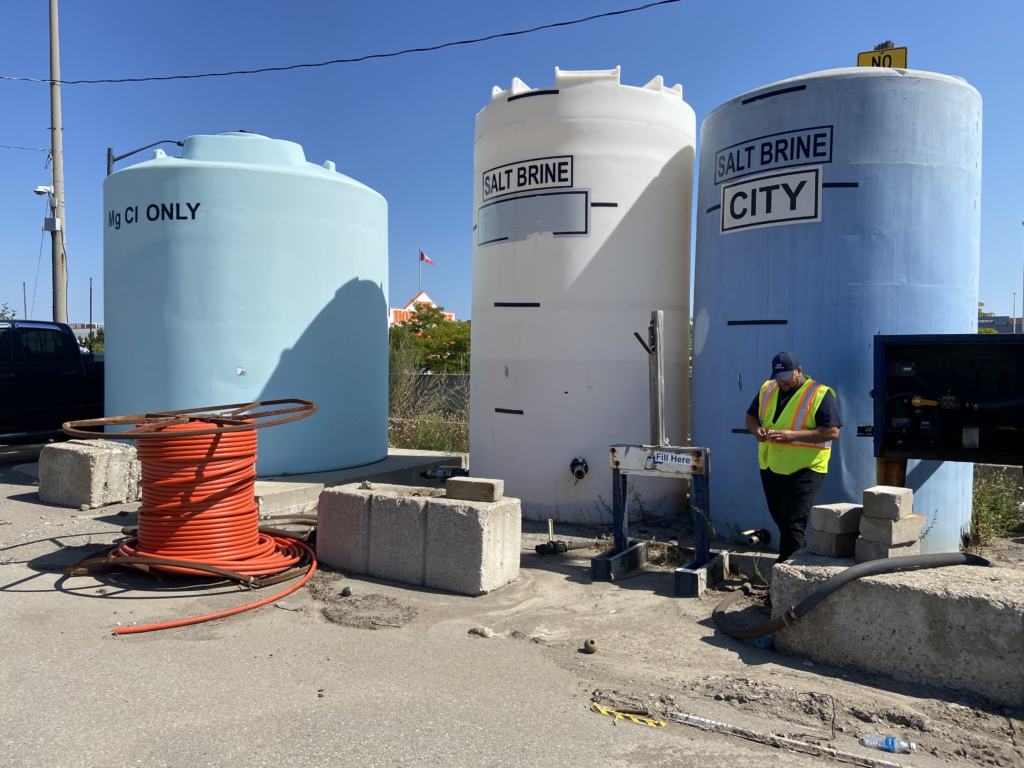
With upcoming changes to the site and limited space available, the Works Yard identified that the three brine tanks were surplus to operational requirements. Rather than moving directly toward disposal, the Works Yard leveraged the procedures outlined in the City of Mississauga’s Surplus Assets Solution tool and engaged the Environmental Sustainability team to explore potential resale or reuse options that could reduce costs and avoid disposal fees.
Early discussions between the Works Yard and Environmental Sustainability teams focused on identifying a cost‑saving alternative that would avoid landfill disposal fees, while adhering to the City’s Disposal of Surplus City Assets policy. Given the size of the tanks and their remaining service life, staff explored whether the tanks could be repurposed or reused rather than disposed.
This internal collaboration shifted the approach away from disposal and toward identifying reuse opportunities. The City’s partnership with Partners in Project Green’s Material Exchange program allowed the City to explore interest from other organizations and municipalities to reuse the tanks.
Solution Finding
Since the tanks were all in working condition, the focus of the outreach was to have them either reused for their original purpose to hold brine or as rainwater harvesting cisterns.
Initially several organizations across the Greater Toronto Area were contacted to potentially use the tanks as rainwater harvesting cisterns, however there was no interest. Next, many municipalities were contacted about using the tanks for their intended purpose as brine holding tanks.
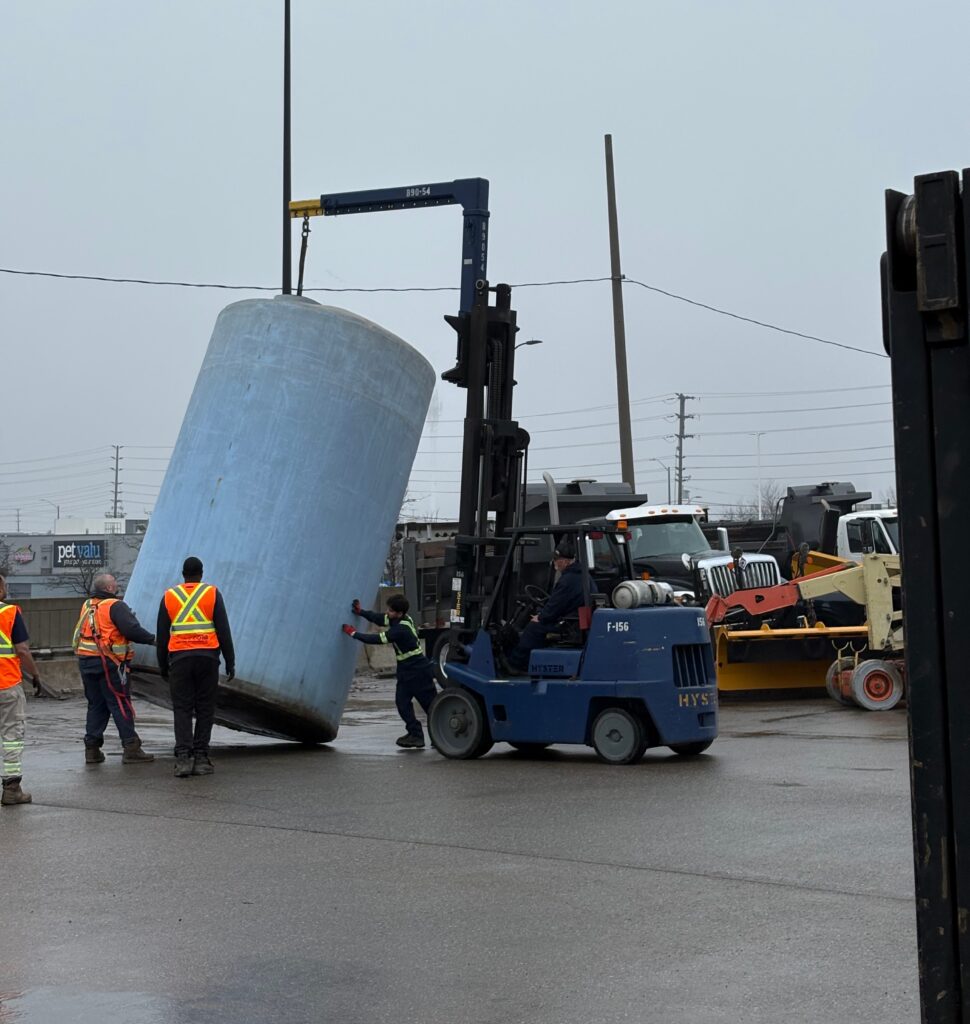
Representatives from the Township of King’s Transportation Service Department were engaged and enthusiastic about the prospect of reusing the brine tanks. After an inspection of the tanks, arrangements were made to load and transport the tanks to their new facility.
The offer of the brine tanks directly supported the Township of King’s goal of modernizing winter maintenance by enabling a pilot of direct liquid application (DLA), which has historically not been used in King. While the Township has long aimed to adopt more proactive, sustainable practices to reduce salt use, it remained constrained by traditional, small-scale service delivery approaches prior to 2022. The availability of the tanks created a cost-effective opportunity to test this transition at the service level while also overcoming practical challenges related to equipment acquisition and logistics, including sourcing a qualified contractor after some providers declined the work and coordinating specialized transportation, rigging, and permitting requirements for oversized equipment. This approach supported continuous improvement, environmental stewardship, and evidence-based decision-making for future investment.
Key Metrics
This exchange resulted in about 2.76 tonnes of plastic being diverted from landfill and avoided 0.06 Co2e as it continues to be used in the Township of King. This resulted in savings of approximately $98,000 by avoiding the purchase of new tanks.
Lessons Learned
This project demonstrated how applying a reuse‑first mindset to surplus municipal assets can deliver both environmental and financial benefits. Through early cross-departmental engagement, the City of Mississauga was able to advance its Surplus Assets Solutions tools and promote the reuse of unique items that may otherwise be perceived as waste despite their continued value elsewhere. By exploring reuse opportunities, the City of Mississauga reduced waste sent to landfill, supported circular economy principles, and avoided disposal fees.
For the Township of King, a key lesson from this initiative is the value of thinking outside of traditional municipal delivery models and leveraging strong relationships across organizations to achieve shared outcomes. The success of the brine tank acquisition was made possible through collaboration with external partners, including the City of Mississauga and Partners in Project Green, a program of the Toronto and Region conservation Authority and Toronto Pearson, which helped facilitate the connection and promote knowledge sharing across municipalities.
This experience demonstrated that smaller municipalities do not need large capital budgets to implement meaningful service improvements. By being proactive, resourceful, and open to partnership opportunities, the King Township was able to advance a new service capability with minimal upfront investment. It also reinforced that creativity and collaboration, rather than scale alone, are critical drivers in improving service levels, advancing sustainability goals, and accelerating innovation within municipal operations.
_____________________________________________________________________________