
Background
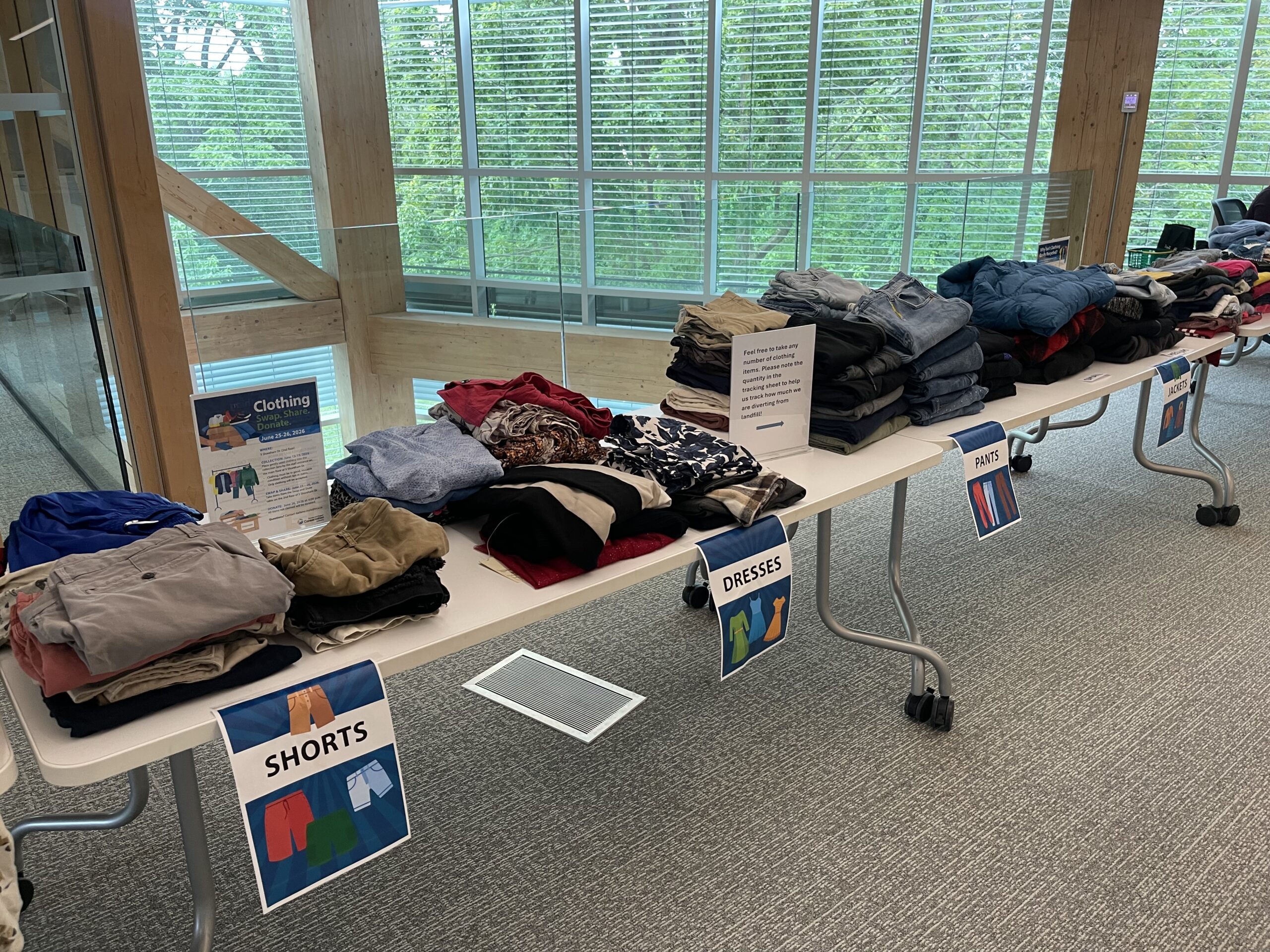
Over 2 days in June 2026, Partners in Project Green (PPG) hosted a Clothing Swap at the Toronto and Region Conservation Authority’s (TRCA) head office to engage employees on the environmental impact of textiles while allowing them to update their wardrobe for free with clothing donated by their colleagues.
One of the driving sustainability elements of this initiative was to offer a more circular approach to disposing of unwanted clothes than a traditional clothing collection drive.
Simply put, clothes are not made with end-of-life in mind, which results in nearly all textiles ending up in landfill eventually. Due to the complex blend of materials clothing is made of, there is no accessible and affordable method of separating materials for continued use. In addition, removing zippers and buttons is an arduous process that is not completed on a large scale. As a result, less than 1% of textiles are recycled into new clothing.
Common fabrics like polyester, acrylic, and nylon are synthetic materials made from plastic (and therefore oil), which make up nearly 70% of clothing produced worldwide. These fabrics release microplastics into the environment and often use toxic chemical dyes during production. Which is why the United Nations has identified textiles as a key sector in address global plastic pollution.
Scope of the Project
To do our part in reducing plastic and textile pollution, Partners in Project Green piloted a two-day clothing swap at the TRCA head office to:
- Document the process of hosting a clothing swap including planning, execution, and lessons learned, to help other organizations run similar events.
- Engage employees in understanding the environmental impacts of the textile industry
- Provide a sustainable solution for disposing of unwanted clothes while gaining new items.
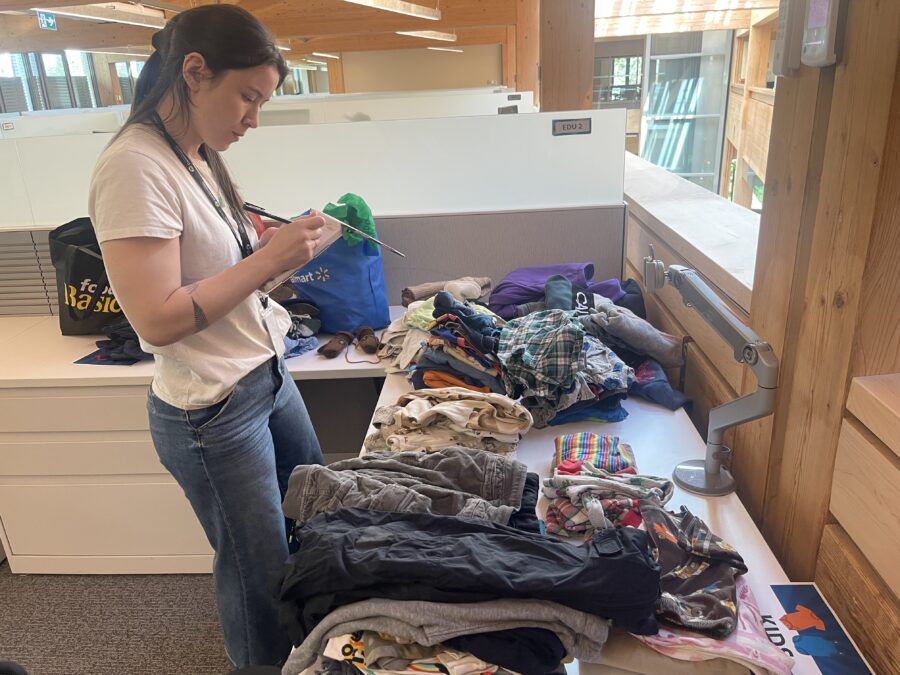
The clothing donation and swap were promoted over a few weeks. A collection bin was set up in the office for one week to allow employees to donate items ahead of the event. Accepted items needed to be in good condition, free of stains or rips. This pilot focused on clothing, however if replicated, participants could be encouraged to bring in any items including, toys and household items.
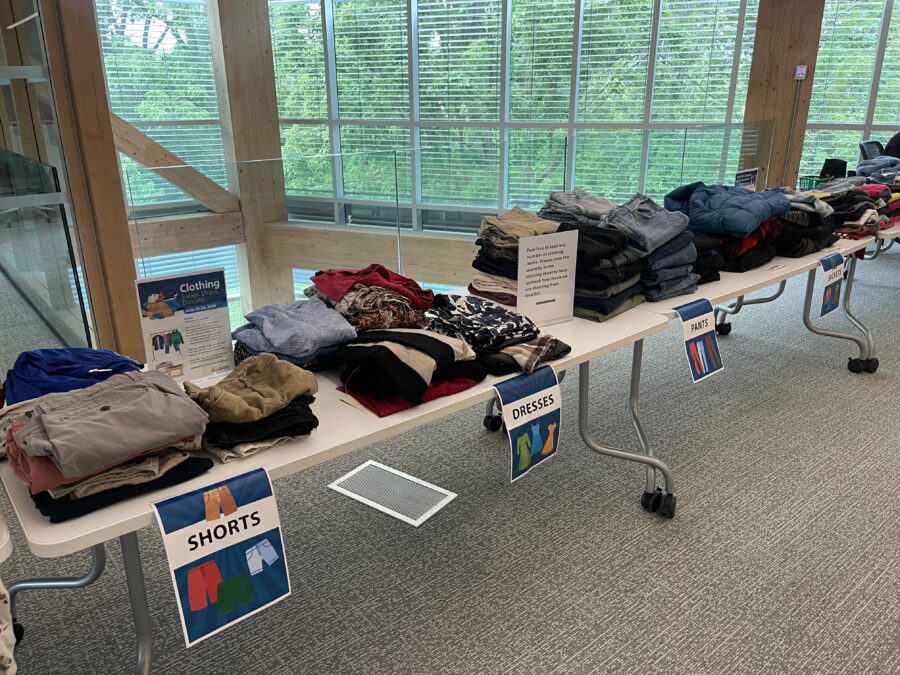
PPG staff sorted through the donated items, selecting those in good condition and organizing them by type and size for display. Over the two-day event, clothing was displayed and employees were encouraged to take any number of items they wanted, free of charge. Items that remained after the event were donated to Diabetes Canada.
Key Metrics
Three hundred and fifty-seven (357) items, weighing approximately 122 kg, were donated ahead of the clothing swap by staff and diverted from landfill.
Thirty-eight (38) staff members participated in the two-day event, taking a total of 112 items, weighing approximately 50kg. These items were given a second chance through reuse by colleagues.
Lessons Learned
Well Received by Staff: The feedback received from employees was very positive. It provided them with an opportunity to take a break from their work, connect with colleagues, and participate in a shared sustainability initiative. The event allowed the sustainability team with an opportunity to engage on the environmental impact of textiles and to share different ways to be more sustainable.
Staffing Needs: Since the PPG team wanted to document the planning and delivery of the event in detail, more staff time was required to sort the material, track metrics and engage with participants. If metrics are not as important; it can be done very informally with little supervision. If more items are included in the swap, recruiting volunteers to sort, display and manage the swap would be important for the success of the program.
Length of Event: The event could have run longer than the 2 days allotted. Some staff mentioned they could not bring clothing for the week a bin was set up for collection prior to the event. With the event only running two days, it was challenging to accept clothing during the swap.
Conclusion
The pilot clothing swap demonstrated its potential as a meaningful employee engagement initiative. To support broader implementation, a planning and delivery guide for hosting a clothing swap will be incorporated into the Campaign Guide for PPG’s annual Recycling Collection Drive held in October during Circular Economy Month in Canada. This resource will help participating organizations engage employees while promoting textile reuse and waste reduction.